-
Bus, Airlines
-
3 Stars Hotels
-
3,120 meters
-
Paro Airport
-
Feb, Mar, Apr & May
-
Eco-Tour, Hiking
-
All meals during the trek
-
English, Hindi, Spanish, French, Chinese
-
Easy to Moderate
-
2-15
-
12
-
65
Overview
Experience the natural beauty, rich culture, and spiritual charm of Bhutan as you journey through Thimphu, Punakha, Phobjikha, and Paro. From peaceful valleys and majestic dzongs to breathtaking mountain passes and the iconic Tiger’s Nest, this journey offers a perfect blend of nature, adventure, and Bhutanese heritage
Highlights
- Discover Bhutan’s vibrant capital, sacred landmarks, traditional culture, and the magnificent Buddha Dordenma.
- Explore the majestic Punakha Dzong, Chimi Lhakhang, and the scenic Himalayan views from Dochula Pass.
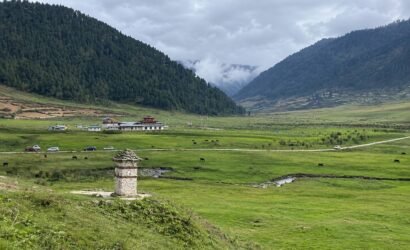
- Experience peaceful rural life, famous red rice fields, and the serene beauty of Phobjikha Valley.
- Explore historic dzongs, ancient temples, and the legendary ruins of Drukgyal Dzong with views of Mt. Jomolhari.
- Enjoy spectacular Himalayan panoramas and sweeping views over the Haa and Paro valleys.
- Hike to the iconic Taktsang Monastery, dramatically perched on a cliff and steeped in centuries of spiritual legend.
Itinerary
Welcome to Bhutan, the Land of the Thunder Dragon. Upon arrival at Paro International Airport, your guide will warmly welcome you and accompany you to Thimphu. Take some time to relax and acclimatize to the altitude before checking into your hotel and enjoying your first taste of authentic Bhutanese cuisine.
Later, visit the National Memorial Chorten, built in honour of Bhutan’s late King Jigme Dorji Wangchuck, followed by a visit to the majestic Tashichho Dzong, an important historic fortress and the seat of Bhutan’s government and monastic administration. If your visit falls on a weekend, explore the lively Centenary Farmers’ Market, where local farmers gather to sell fresh produce and traditional products.
Continue to Kuenselphodrang Nature Park, home to the magnificent 169-foot Buddha Dordenma statue, one of the world’s largest Buddha statues, offering panoramic views over Thimphu Valley. In the evening, enjoy a leisurely walk through Thimphu town before dinner and an overnight stay at your hotel.
(72 km, approximately 3 hours’ drive)
After breakfast, visit Pangri Zampa Lhakhang, peacefully situated in a beautiful meadow near the river, about a 20-minute drive from the lodge on the way to Tango and Cheri Monasteries. The temple is said to have appeared in the vision of Zhabdrung Ngawang Namgyal, which guided him from Tibet to Bhutan. It was built by Ngawang Choegyel, the great-grandfather of the Zhabdrung, and served as the Zhabdrung’s residence when he arrived in Bhutan in 1616.
Today, Pangri Zampa serves as an important astrology centre of the state clergy and is home to around 100 monks who study astrology. During your visit, learn about Bhutanese astrology and, if interested, have your own personal astrological reading.
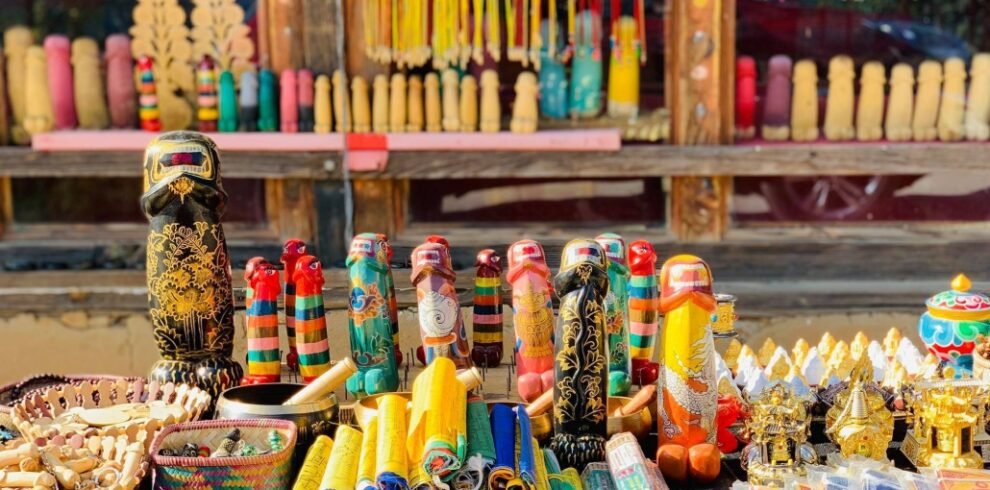
Continue your scenic drive to Punakha via Dochula Pass. If weather conditions are clear, stop at the pass to admire breathtaking views of the higher Himalayan peaks. Upon arrival in Punakha, check into your hotel before visiting Chimi Lhakhang, the famous Temple of Fertility built by Lama Drukpa Kuenley in the 15th century. According to legend, he subdued demons using his “Magical Thunderbolt,” giving the temple its unique spiritual significance.
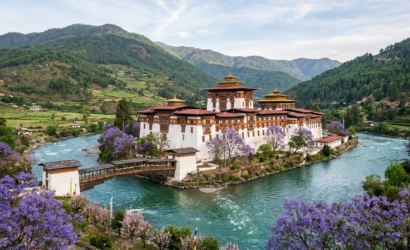
Enjoy lunch in Punakha before exploring the magnificent Punakha Dzong, built in 1637 by Shabdrung Ngawang Namgyal. Beautifully located between the Pho Chu (Male River) and Mo Chu (Female River), the dzong served as the seat of government for many years until the reign of the second King.
The construction of the dzong was foretold by Guru Rinpoche, who predicted that a person named Namgyal would arrive at a hill resembling an elephant. At the site was a small structure known as Dzong Chu, which housed a statue of Buddha. According to legend, Shabdrung instructed the architect, Zow Palep, to sleep in front of the statue. While asleep, Palep was guided in a dream by the Shabdrung to Zangtopelri, where he was shown the palace of Guru Rinpoche. Inspired by this vision, he created the design for the new dzong, following the tradition of keeping the design unwritten. The dzong was named Druk Pungthang Dechen Phodrang, meaning “Palace of Great Happiness.”
The dzong also preserves war materials captured during battles with the Tibetans. Today, Punakha remains the winter residence of the Je Khenpo, and it was here that King Jigme Dorji Wangchuck convened the new National Assembly in 1952. Dinner and overnight stay in Punakha.
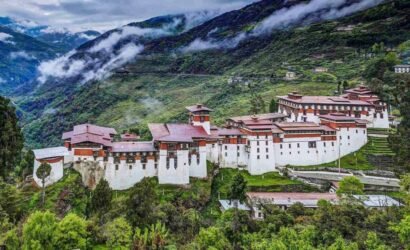
After breakfast, drive to Wangduephodrang and visit the historic Wangduephodrang Dzong, founded by Zhabdrung Ngawang Namgyal in 1638 on a strategic ridge overlooking the valleys. Once Bhutan’s second capital, the dzong is associated with the legend of four ravens flying in four directions, symbolizing the spread of Buddhism across the country.
Continue to Limbukha Village, known for its peaceful atmosphere and cultivation of Bhutan’s famous red rice. The village is also traditionally associated with peace, with local legends recalling how its people served as peace negotiators during medieval wars. In the afternoon, drive to Phobjikha Valley for dinner and an overnight stay.
Depart Phobjikha early morning and drive west towards Paro, crossing the scenic Dochula Pass once again. Arrive in Paro in time for a late lunch at a local restaurant.
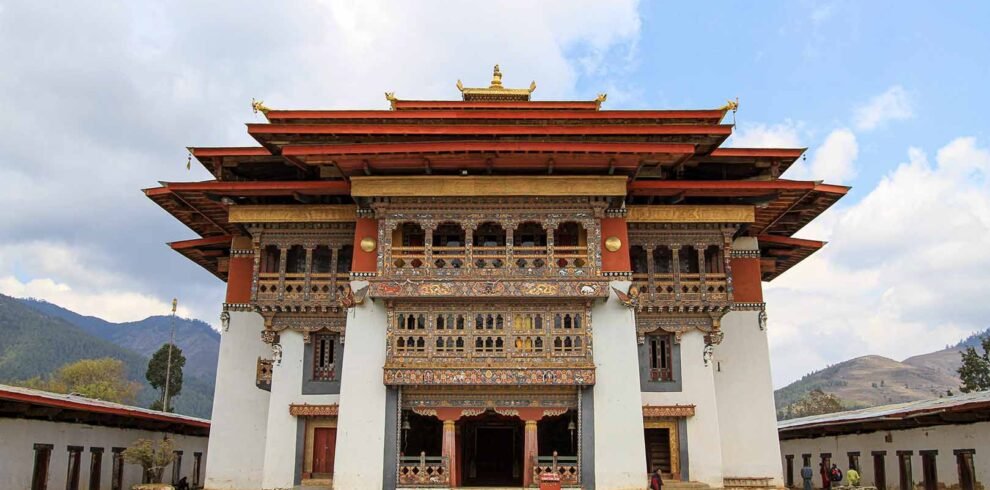
In the afternoon, explore Paro’s highlights, including Paro Rinpung Dzong and its traditional cantilever bridge, followed by Kyichu Lhakhang, one of Bhutan’s oldest temples, known for its sacred orange tree that bears fruit throughout the year. Continue to the historic ruins of Drukgyal Dzong, the “Fortress of the Victorious Drukpa,” which played an important role in defending Bhutan against Tibetan invasions. On a clear day, enjoy spectacular views of the snow-capped Mount Jomolhari (7,314 m). Dinner and overnight stay in Paro.
After breakfast, drive 35 km to Chele La Pass, one of Bhutan’s highest motorable passes at an elevation of 3,810 m, separating the Haa and Paro valleys. Enjoy a scenic journey through dense spruce and larch forests, with breathtaking views of Mt. Jomolhari, Jichu Drake, and the surrounding Himalayan peaks on a clear day, along with panoramic views of the Haa and Paro valleys. Spend the day relaxing and exploring at your own pace. Dinner and overnight stay in Paro.
After breakfast, hike to Taktshang Monastery (Tiger’s Nest), one of Bhutan’s most iconic landmarks. The hike takes about 1½ hours to the viewpoint, where you can enjoy breathtaking views of the monastery dramatically perched on the cliff. After a short refreshment break, continue for another hour to reach the monastery. According to legend, Guru Rinpoche arrived here in the 8th century on the back of a tigress and meditated in a cave. The main monastery complex dates back to 1692 and was fully restored after a devastating fire in 1998.
After exploring Taktsang, hike back down with a lunch stop at the viewpoint cafeteria before returning to the hotel. En route, visit Kyichu Lhakhang, one of the 108 temples built by the Tibetan King Songtsen Gampo in the 7th century to help spread Buddhism across the Himalayas. Spend the evening relaxing in Paro. Dinner and overnight stay in Paro.
In the morning, after breakfast representative from Bhutan Travel Services will see you off at the Paro airport for your onward flight.
Cost
The Cost Includes
- Accommodation is on twin sharing basis.
- Meals : breakfast at all places.
- Transfers from one place to another.
- Sightseeing in private cars.
- Vehicle will be provided based on the itinerary.
- All current taxes such as hotel taxes and transportation taxes.
The Cost Excludes
- Entrance fees at the monuments/ temples.
- Meals not mentioned in inclusions.
- Personal Expenses / Purchase of thing.
- Any kind of insurance.
- Any increase in the govt. taxes and state taxes.
- Anything not mentioned in the itinerary.
Frequently Asked Questions (FAQs)
Annapurna Base Camp is a Grade B or a moderately difficult trekking route. So any fit person can do this trek, even if you do not have any previous experience. You should be aware of what to expect and mentally prepare for it. Then, as long as you will too, you can.
On average, you walk about 4 to 6 hours per day. One or two days can be as less as 3hrs and one or two days can be as long as 7hrs.
The highest altitude reached is 4190m. This is the elevation of Annapurna Base Camp. ABC is the highest we will climb in this trek.
Yes, you can charge batteries en route. Charger should be brought. There are hot shower facilities as well. You may have to pay a certain amount for both ($1-$2). Negotiate. Also, a hot water facility could be free at a lower elevation.
No. There are no ATMs on this trek route. You will have to draw enough cash in Pokhara or Kathmandu. There are a number of ATMs in these cities. Everything is paid in Nepali rupees. So money should be exchanged before the start of the trek.
Yes. The Internet can be accessed in most places. Sometimes, there might be some technical problems. The Internet in Nepal is not as fast as you are used to and at times you can just lose connection.
Not really. It depends on you. If you want, ABC trekking can be done independently. You could hire a guide and a porter by yourself instead of going through an agency or not hire a guide at all. Although, not having a guide can be a little problematic during the offseason.
It really depends on you. Is it your first time in Nepal? How confident are you of being able to find your way around? How pressed on time are you? If you go through an agency, it will be costlier but everything will be planned. You will only have to come, trek and return.
For the Annapurna region, pay for guides range from $20 to $30 per day and porters take $15 to $25 per day.