-
Bus, Airlines
-
3 Stars Hotels
-
5,416 metres
-
Paro Airport
-
Feb, Mar, Apr & May
-
Eco-Tour, Hiking
-
All meals during the trek
-
English, Hindi, Spanish, French, Chinese
-
Easy to Moderate
-
2-15
-
10
-
65
Overview
Journey through Bhutan’s breathtaking valleys, ancient monasteries, and vibrant cultural treasures, from the legendary Tiger’s Nest and the majestic Punakha Dzong to the peaceful landscapes of Gangtey and the spiritual heartland of Bumthang. Experience the magic, traditions, and timeless beauty of the Himalayan Kingdom.
Highlights
- Discover ancient temples, historic dzongs, and the legendary monastery perched dramatically on a mountainside.
- Explore Bhutan’s vibrant capital, where royal heritage, traditional arts, and spiritual landmarks come together.
- Marvel at the majestic Punakha Dzong and the sacred stories of Chimi Lhakhang.
- Experience peaceful mountain valleys, sacred monasteries, and the ancestral home of Bhutan’s royal family.
- Explore Bhutan’s spiritual heartland, where ancient temples, sacred lakes, and timeless traditions await.
Itinerary
Upon arrival, your guide will welcome you at Paro Airport and escort you to your hotel. After tea, enjoy a scenic drive to the historic ruins of Drukgyal Dzong, built in 1647 by Zhabdrung Ngawang Namgyal. Explore its ancient ramparts and, on a clear day, admire the breathtaking views of Mount Jhomolhari. On the return journey, visit the sacred Kyichu Lhakhang, one of Bhutan’s oldest temples, before enjoying dinner and an overnight stay at the hotel.
After breakfast, enjoy an unforgettable excursion to Taktsang Monastery, famously known as Tiger’s Nest. From Satsam Chorten, begin a scenic journey through pine forests and colourful prayer flags, with the option of a horse ride to the viewpoint. Perched dramatically on a 900-metre cliff, this sacred monastery is steeped in the legend of Guru Padmasambhava. After lunch, visit Ta Dzong, the National Museum, and the magnificent Paro Rinpung Dzong, crossing a traditional covered bridge before driving to Thimphu. Dinner and overnight at the hotel.
Begin your day with a visit to the National Memorial Chorten and Dupthop Lhakhang, one of Bhutan’s few surviving nunneries. Explore the National Library, home to ancient Buddhist manuscripts, and the Painting School, where traditional Thangka art continues to flourish. After lunch, discover Bhutan’s traditional medicine, royal silver craftsmanship, and handmade paper production. Continue to the magnificent Tashichho Dzong and historic Simtokha Dzong before browsing the Handicrafts Emporium and shopping for souvenirs in Thimphu. Overnight at the hotel.
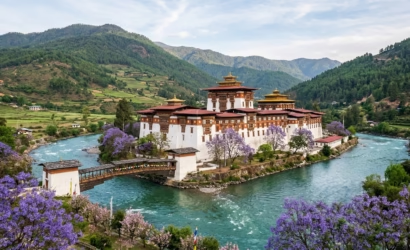
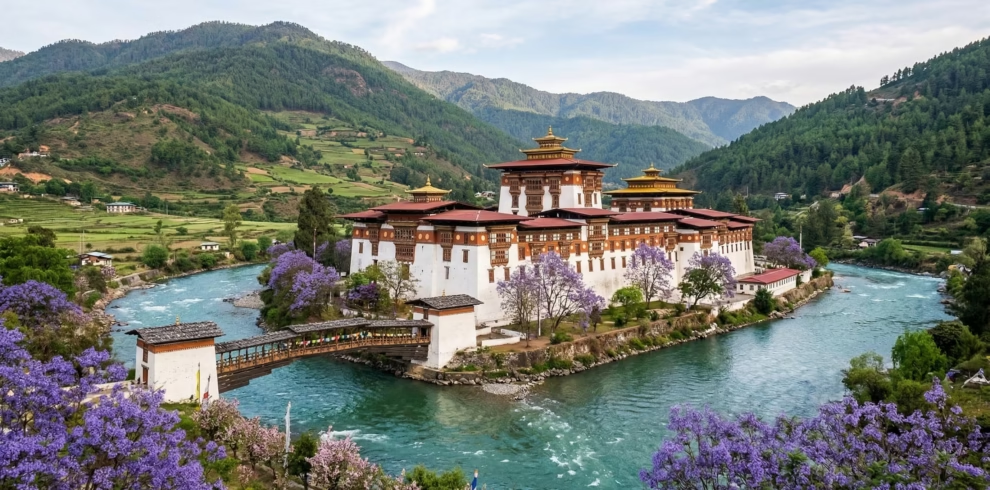
After breakfast, embark on a scenic 72 km drive to Punakha via the beautiful Dochula Pass, where clear skies offer spectacular views of the Himalayan peaks. Continue to Chimi Lhakhang, the famous Temple of Fertility associated with the legendary Lama Drukpa Kuenley. After lunch in Punakha, explore the magnificent Punakha Dzong, the “Palace of Great Happiness,” beautifully situated between the Pho Chu and Mo Chu rivers. The war materials captured during the battle with Tibetans are preserved here. Punakha is still the
winter residence of Je-Khenpo and King Jigme Dorji Wangchuk convened the new national Assembly here in 1952. Discover its fascinating history, traditional architecture, and spiritual significance before settling in for an overnight stay at the hotel.
Start your day with an early breakfast and a scenic drive towards Trongsa via Wangdue and Gangtey. In Wangdue, visit the historic Wangduephodrang Dzong, built in 1638 at the confluence of the Mo Chu and Tang Chu rivers, and hear the fascinating legend of the four ravens that foretold the spread of Buddhism across Bhutan.
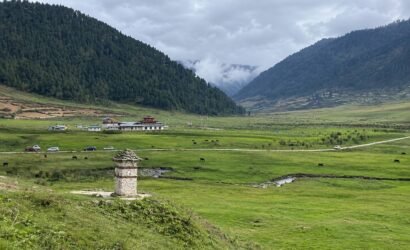
Continue to the peaceful Gangtey Valley and visit the beautiful Gangtey Gompa, a significant Nyingmapa monastery founded in 1613 and closely associated with the Pema Lingpa tradition. Explore the breathtaking Phobjikha Valley, renowned as the winter home of the endangered black-necked cranes. Enjoy a packed lunch in Gangtey before continuing to Trongsa.
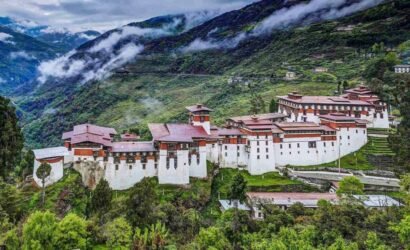
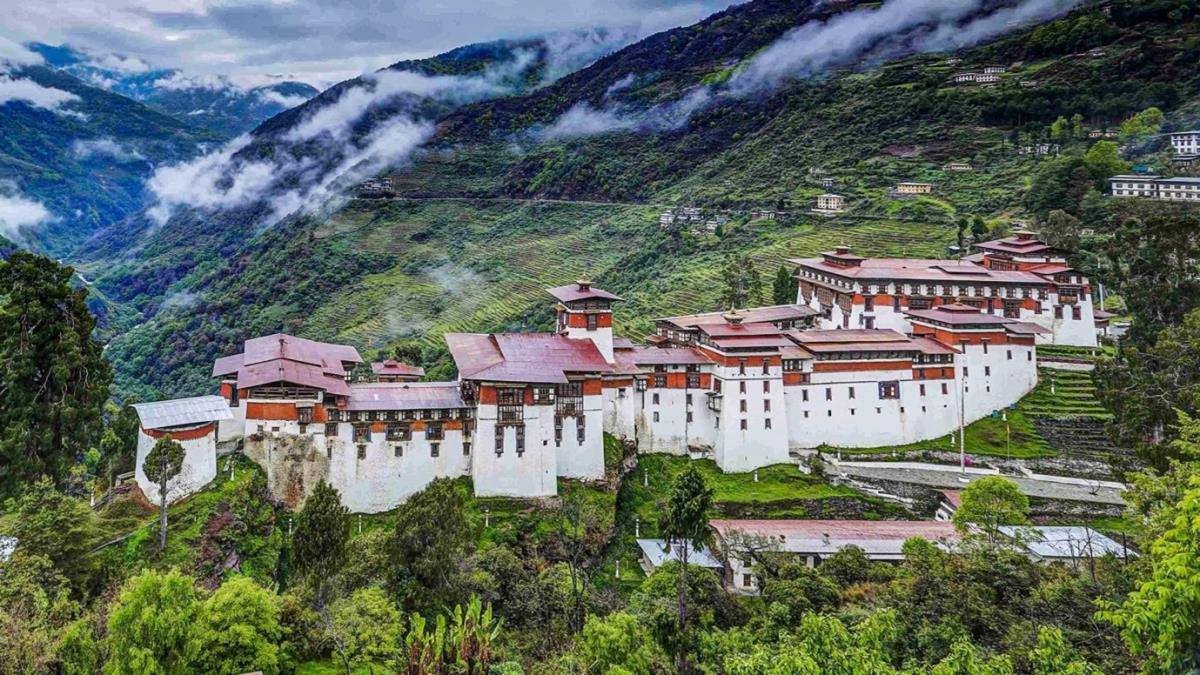
Upon arrival, discover the impressive Trongsa Dzong, built in its present form in 1644 and regarded as the ancestral home of Bhutan’s royal family, where the first two hereditary kings ruled the kingdom. Finally, visit the ancient Ta Dzong watchtower and its historic chapel before checking into your hotel for an overnight stay.
After breakfast, enjoy a scenic drive to Bumthang, the spiritual heartland of Bhutan, and have lunch upon arrival. In the afternoon, visit the impressive Jakar Dzong, meaning “Castle of the White Bird,” whose present structure dates back to 1667 and is considered one of the largest dzongs in Bhutan. Continue to Lamey Goemba, an 18th-century palace and monastery built by Dasho Phuntsho Wangdi.
Next, discover the sacred Jambay Lhakhang, believed to have been built in 659 by the Tibetan King Srongsen Gampo and visited by Guru Rimpoche. The temple is steeped in legends of hidden treasures and is famous for the vibrant Jambay Lhakhang Drup festival held every October. Overnight at the hotel in Bumthang.
After breakfast, explore Bumthang’s sacred heritage, beginning with Chakhar Lhakhang, or “Iron Castle,” believed to stand on the site of the palace of King Sindhu Raja, who invited Guru Rimpoche to Bumthang. Continue to Kurjey Lhakhang, named after the body imprint of Guru Rimpoche, and Tamshing Lhakhang, the important Nyingmapa temple founded by Pema Lingpa in 1501.
After lunch, visit Membartsho, the sacred “Burning Lake,” where Terton Pema Lingpa is believed to have discovered hidden treasures and relics of Guru Rimpoche. End the day with visits to a Mathra factory and a local cheese factory before returning to the hotel for an overnight stay.
Early breakfast, drive to Thimphu. Packed lunch will be served on the way. Dinner and over night in Hotel.
In the morning, after breakfast representative
from Bhutan Travel Services will drive you off at the Paro airport for your onward flight.
Cost
The Cost Includes
- Accommodation is on twin sharing basis.
- Meals : breakfast at all places.
- Transfers from one place to another.
- Sightseeing in private cars.
- Vehicle will be provided based on the itinerary.
- All current taxes such as hotel taxes and transportation taxes.
The Cost Excludes
- Entrance fees at the monuments/ temples.
- Meals not mentioned in inclusions.
- Personal Expenses / Purchase of thing.
- Any kind of insurance.
- Any increase in the govt. taxes and state taxes.
- Anything not mentioned in the itinerary.
Frequently Asked Questions (FAQs)
Annapurna Base Camp is a Grade B or a moderately difficult trekking route. So any fit person can do this trek, even if you do not have any previous experience. You should be aware of what to expect and mentally prepare for it. Then, as long as you will too, you can.
On average, you walk about 4 to 6 hours per day. One or two days can be as less as 3hrs and one or two days can be as long as 7hrs.
The highest altitude reached is 4190m. This is the elevation of Annapurna Base Camp. ABC is the highest we will climb in this trek.
Yes, you can charge batteries en route. Charger should be brought. There are hot shower facilities as well. You may have to pay a certain amount for both ($1-$2). Negotiate. Also, a hot water facility could be free at a lower elevation.
No. There are no ATMs on this trek route. You will have to draw enough cash in Pokhara or Kathmandu. There are a number of ATMs in these cities. Everything is paid in Nepali rupees. So money should be exchanged before the start of the trek.
Yes. The Internet can be accessed in most places. Sometimes, there might be some technical problems. The Internet in Nepal is not as fast as you are used to and at times you can just lose connection.
Not really. It depends on you. If you want, ABC trekking can be done independently. You could hire a guide and a porter by yourself instead of going through an agency or not hire a guide at all. Although, not having a guide can be a little problematic during the offseason.
It really depends on you. Is it your first time in Nepal? How confident are you of being able to find your way around? How pressed on time are you? If you go through an agency, it will be costlier but everything will be planned. You will only have to come, trek and return.
For the Annapurna region, pay for guides range from $20 to $30 per day and porters take $15 to $25 per day.