-
Bus, Airlines
-
3 Stars Hotels
-
5,416 metres
-
Paro
-
Feb, Mar, Apr & May
-
Eco-Tour, Hiking
-
All meals during the trek
-
English, Spanish, French, Chinese, Hindi
-
Easy to Moderate
-
2-15
-
12
-
65
Overview
Embark on an unforgettable journey through Bhutan combining ancient monasteries, rich culture, and breathtaking Himalayan trekking. Explore the historic valleys of Paro and Thimphu before trekking across the scenic Druk Path, passing alpine forests, mountain ridges, yak pastures, and serene high-altitude lakes. From the spiritual beauty of Tiger’s Nest to the peaceful landscapes of the Himalayas, this adventure offers an authentic blend of nature, culture, spirituality, and trekking.
Highlights
- Discover ancient dzongs, sacred temples, museums, and the charming Paro Valley.
- Hike to Bhutan’s iconic monastery dramatically perched on a cliffside.
- Trek through pristine forests, alpine landscapes, and breathtaking mountain trails.
- Experience panoramic views of Paro Valley and surrounding snow-capped peaks.
- Camp beside beautiful high-altitude lakes famous for their giant trout.
- Enjoy spectacular views of Mt. Jomolhari, Jichu Drake, and other snow-capped peaks.
- Explore Bhutan’s vibrant capital and discover its rich cultural heritage.
- Experience traditional textiles, handmade paper, museums, monasteries, and historic dzongs.
Itinerary
Arrive in Paro by Druk Air or Bhutan Airlines, enjoying spectacular aerial views of the Himalayas, including Mt. Everest, Kanchenjunga, Chomolhari, and Jichu Drakey. Upon arrival, meet your Bhutan Travel Services representative and enjoy lunch before exploring Paro Valley.
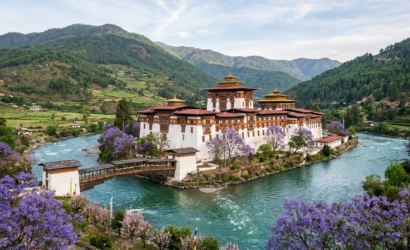
Visit the National Museum, home to fascinating religious relics, artworks, and traditional handicrafts, followed by the historic Rinpung Paro Dzong, known for its impressive architecture and sacred paintings. Cross the traditional cantilevered wooden bridge leading into Paro town before returning to your hotel.
Overnight: Hotel/Resort in Paro.
After breakfast, drive about 10 km to the trailhead and begin a scenic hike to Taktsang Monastery, famously known as Tiger’s Nest. The approximately 2-hour uphill trail winds through peaceful pine forests. According to legend, Guru Rinpoche arrived here on the back of a tigress in the 8th century to spread Buddhist teachings in Bhutan. Perched dramatically on a cliffside above the valley, Taktsang is one of Bhutan’s most sacred landmarks.
In the afternoon, visit the ruins of Drukgyel Dzong, a historic 17th-century fortress built by Zhabdrung Ngawang Namgyal to commemorate Bhutan’s victory over Tibetan invaders in 1644. Enjoy magnificent views of the sacred Mount Jomolhari (7,314 m) from the site.
On the return to Paro, visit Kyichu Lhakhang, one of the 108 temples built by Tibetan King Songtsen Gampo in the 7th century to spread Buddhism across the Himalayas.
Overnight: Hotel/Resort in Paro.
Distance: 8km
Estimated travel time: 6hrs
Descent: 1090m
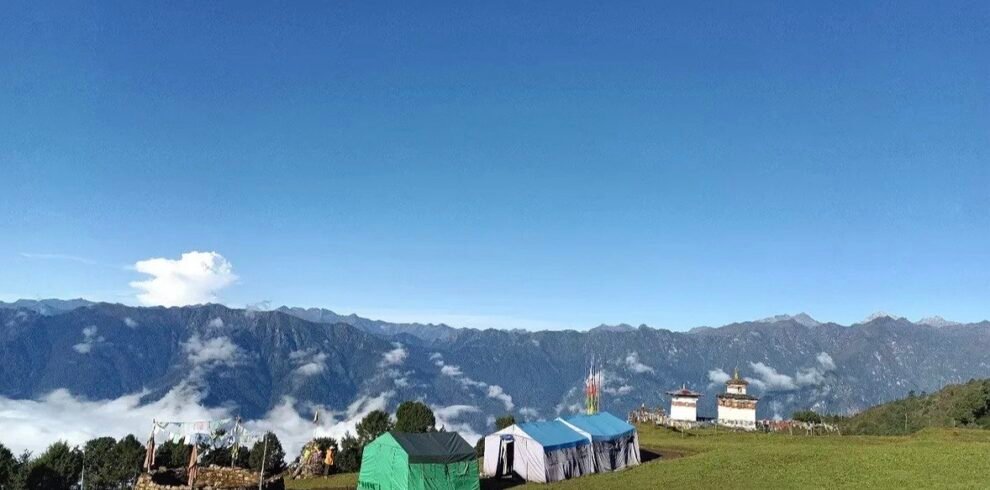
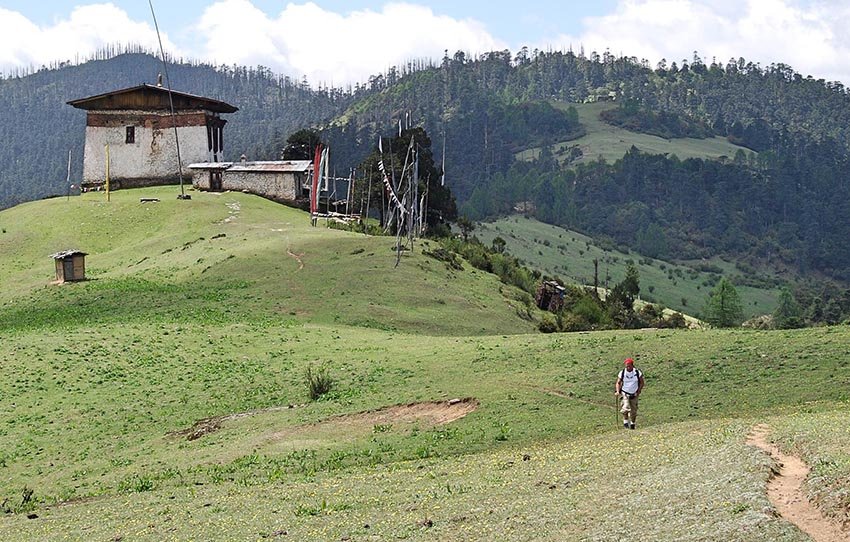
This is a short trekking day starting with a climb to Jele Dzong. The trek trail ascends gradually up to the camp, and in winter, Paro valley can be seen surrounded by snowcapped mountains. Above the camp is Jele La (3400m) and Jele Dzong. There is also a Lhakhang containing a statue of Buddha Shakyamuni.Overnight at campsite (Altitude 3480m).
Distance: 10km
Estimated time: 4hr
Ascent :310m, descent: 50m
We begin with a 90-minute climb and then a more gradual ascent through thick alpine forests of rhododendrons with splendid views of Jomolhari and other snowcapped peaks. We may hear some pheasants calling during the day and see camps of yak herders around your campsite.Overnight at campsite (Altitude 3770m).
Distance: 11km
Estimated time: 4hrs
Ascent :330m, descent: 230m
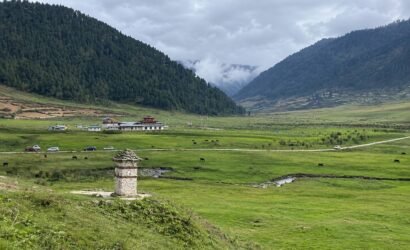
The trail follows the ridge, which offers great views of Jichu Drake (6989m), the peak representing the protective deity of Paro. Camp is close to Jimilangtsho lakes, famous for their giant sized trout.Overnight at campsite (Altitude 3870m).
Distance: 15km
Walking time: 7hrs
Sleeping altitude: 3500m
The trail will take us through dwarf rhododendrons and junipers. We will also pass the lakes of Janatso and Simkotha. The view of the far ridge across the valley which you trekked will fill you with a sense of personal satisfaction and renew you with extra confidence in yourself. Tonight is going to be the coldest of all our camps.Overnight at campsite (Altitude 3500m).
Distance: 5km
Estimated time: 3hrs
Descent: 1130m
The trek to Thimphu is downhill all the way, passing through a forested area of mostly blue pine. At a leisure pace, you reach Thimphu in 3 hours. Afternoon, free time to go around.Overnight: hotel/resort in Thimphu.
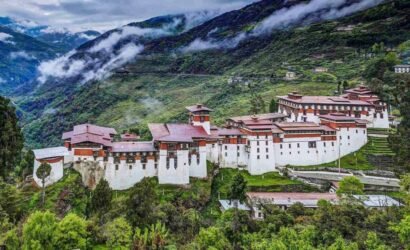
You will begin your day early with a visit to National Memorial Chorten (stupa). It was built in 1974 in memory of the late King Jigme Dorji Wangchuk who passed away in 1972. It is one of the most visible religious structures in town and for daily worship of local people. Remember to walk around the Chorten at least once in clockwise to gain merit and good luck. From there we go to Folk Heritage Museum, which is housed in a restored three story traditional compressed mud and timber house. It showcases the traditional artifacts which were using from the past until now. Next stop is National Textile Museum, which has a striking collection of intricate textile weaves. The museum also displays major weaving techniques and styles of local dress and textile made by the Bhutanese women and men. From there we go to the Bhutanese Paper Factory that practices an art, which goes back to the 8th century. It is an important element in the preservation of Bhutan’s cultural heritage. You can view the paper making process and purchase gifts from their showroom. Towards the evening you visit Tashichhoe Dzong, which means the “fortress of glorious religion” and is the seat of government. It also houses the throne room of His Majesty and serves as the summer residence of Je Khenpo, the Chief Abbot of Bhutan. The King’s palace is located just below the Dzong.Evening drive to Paro for halt.Overnight: hotel/resort in Paro.
In the morning, after breakfast representative from Bhutan Travel Services will see you off at the Paro airport for your onward flight.
Cost
The Cost Includes
- Accommodation is on twin sharing basis.
- Meals : breakfast at all places.
- Transfers from one place to another.
- Sightseeing in private cars.
- Vehicle will be provided based on the itinerary.
- All current taxes such as hotel taxes and transportation taxes.
The Cost Excludes
- Entrance fees at the monuments/ temples.
- Meals not mentioned in inclusions.
- Personal Expenses / Purchase of thing.
- Any kind of insurance.
- Any increase in the govt. taxes and state taxes.
- Anything not mentioned in the itinerary.
Frequently Asked Questions (FAQs)
Annapurna Base Camp is a Grade B or a moderately difficult trekking route. So any fit person can do this trek, even if you do not have any previous experience. You should be aware of what to expect and mentally prepare for it. Then, as long as you will too, you can.
On average, you walk about 4 to 6 hours per day. One or two days can be as less as 3hrs and one or two days can be as long as 7hrs.
The highest altitude reached is 4190m. This is the elevation of Annapurna Base Camp. ABC is the highest we will climb in this trek.
Yes, you can charge batteries en route. Charger should be brought. There are hot shower facilities as well. You may have to pay a certain amount for both ($1-$2). Negotiate. Also, a hot water facility could be free at a lower elevation.
No. There are no ATMs on this trek route. You will have to draw enough cash in Pokhara or Kathmandu. There are a number of ATMs in these cities. Everything is paid in Nepali rupees. So money should be exchanged before the start of the trek.
Yes. The Internet can be accessed in most places. Sometimes, there might be some technical problems. The Internet in Nepal is not as fast as you are used to and at times you can just lose connection.
Not really. It depends on you. If you want, ABC trekking can be done independently. You could hire a guide and a porter by yourself instead of going through an agency or not hire a guide at all. Although, not having a guide can be a little problematic during the offseason.
It really depends on you. Is it your first time in Nepal? How confident are you of being able to find your way around? How pressed on time are you? If you go through an agency, it will be costlier but everything will be planned. You will only have to come, trek and return.
For the Annapurna region, pay for guides range from $20 to $30 per day and porters take $15 to $25 per day.