-
Bus, Airlines
-
3 Stars Hotels
-
5,416 metres
-
Paro Airport
-
Feb, Mar, Apr & May
-
Eco-Tour, Hiking
-
All meals during the trek
-
English, Spanish, French, Chinese
-
Easy to Moderate
-
2-15
-
12
-
65
Overview
Indulge in an unforgettable journey through Bhutan’s majestic landscapes, luxurious retreats, and timeless cultural treasures. From the vibrant capital of Thimphu to the peaceful valleys of Punakha, Gangtey, and Bumthang, discover ancient monasteries, breathtaking mountain views, and the spiritual beauty of Paro and Tiger’s Nest—all in exceptional comfort and style
Highlights
- Begin your luxury escape with royal heritage, ancient temples, and the vibrant charm of Bhutan’s capital.
- Discover the majestic Punakha Dzong and enjoy a scenic riverside hike to Khamsum Yueley Namgyal Chorten.
- Explore Bhutan’s spiritual heartland, where sacred monasteries and ancient traditions create a truly timeless experience.
- End your journey with breathtaking mountain flights, luxury relaxation, and the iconic Taktsang Monastery.
Itinerary
The flight to Paro is one of the most spectacular mountain flights in the world, with a constantly changing panorama of some of the highest mountains on earth. This beautiful valley is home to many of Bhutan’s oldest monasteries and temples, and the country’s only international airport. After being welcomed with “Khadar” (traditional scarf), a Bhutan Travel Services representative will provide you with the necessary assistance for completion of all immigration and customs formalities. You will enjoy an exquisite lunch experience before transfer by SUV to Bhutan’s capital, Thimphu. Remainder of the day is at leisure to settle in, relax, enjoy the hotel facilities or if you wish undertake a small tour of downtown Thimphu. Overnight at luxury hotel in Thimphu
PUNAKHA-Spend the morning visiting some of the
highlights of the capital, including one of the oldest temples in Thimphu, 12th century Changangkha Lhakhang (Lhakhang means temple) and the National Memorial Chorten, first initiated by the Third King as a protection from the negative elements of modernization, and as a monument to world peace. The Royal Queen Mother completed it as a memorial stupa for the Third King who passed away in 1972. Afterwards if there is time also visit a fascinating replica of a medieval farmhouse at the Folk Heritage Museum before lunch. Transfer by SUV to Punakha, the ancient capital of Bhutan. On arrival, check into luxurious accommodations. Overnight in Punakha.
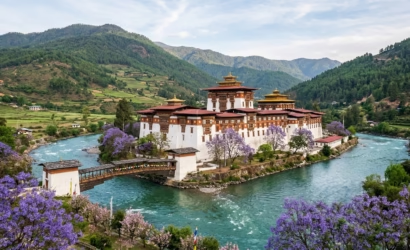
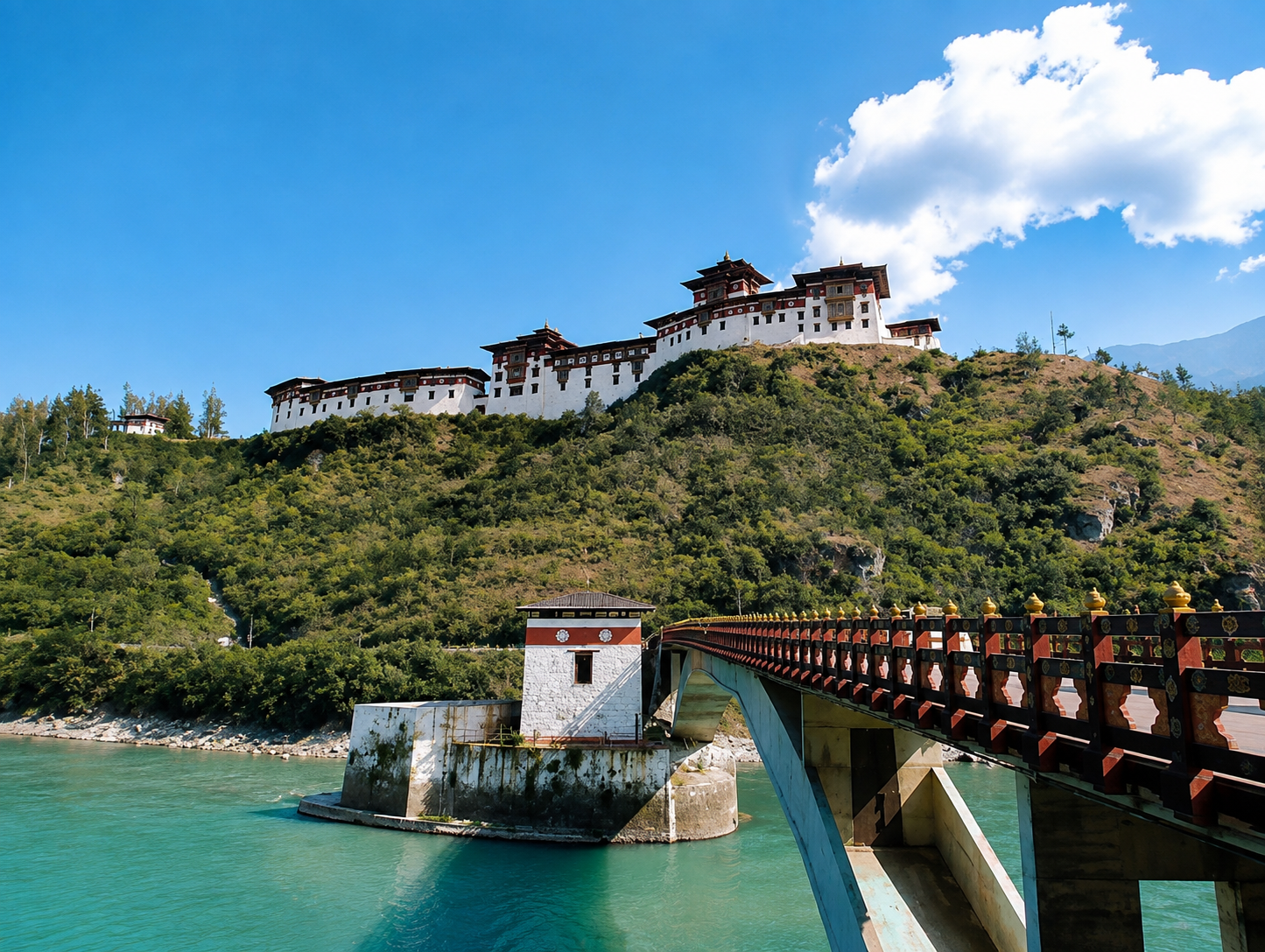
PUNAKHAIn the morning drive to Yabesa village and hike to through rice fields and up to KhamsumYueleyNamgyal Chorten, built by her majesty the queen Ashi Tshering Yangdon Wangchuk. Perched high on a hill on the bank of the river, the Chorten houses paintings belonging to Nyingmapa Traditions. Take a picnic lunch on a picturesque riverside before exploring the Punakha Dzong, the “Palace of Great Happiness” built in 1637 by the Shabdrung, the ‘Unifier of Bhutan’. It is situated at the confluence of the Mo Chu and Pho Chu (Mother and Father Rivers) and is the winter headquarters of the Je Khenpo and hundreds of monks who move from Tashichoedzong in Thimphu to this warmer
location. The three-story main temple of the Punakha Dzong is a breathtaking example of traditional architecture with four intricately embossed entrance pillars crafted from cypress and decorated in gold and silver. It was here in 1907 that
Bhutan’s first king was crowned. After lunch short walk to Chimi Lhakhang, temple of the Drukpa Kuenly who is
also known as the Divine Madman. He inherited the Divine Madman title since he revolted against the orthodox Buddhism in his time. He taught the people that
religion is an inner feeling and it’s not necessary that one should be an ordained monk. He is also considered a symbol of fertility and most childless couples go to his temple for blessing. Overnight in Punakha.
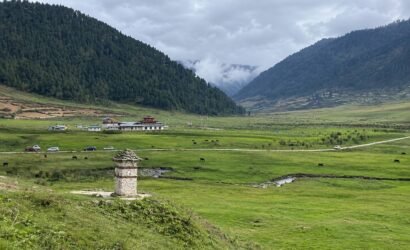
Transfer to Phobjikha Valley (2-3 hrs). Drive by SUV through the winding mountain roads with mixed forests and over high passes before descending down into the wide and picturesque Phobjikha Valley. Phobjikha is one of Bhutan’s few glacial valleys, and chosen winter home of black necked cranes (November – March) migrating from the Tibetan plateau. Overnight in Phobjikha.
Following breakfast visit the Phobjikha Sanctuary to view the majestic black necked cranes (Nov-Mar only) and
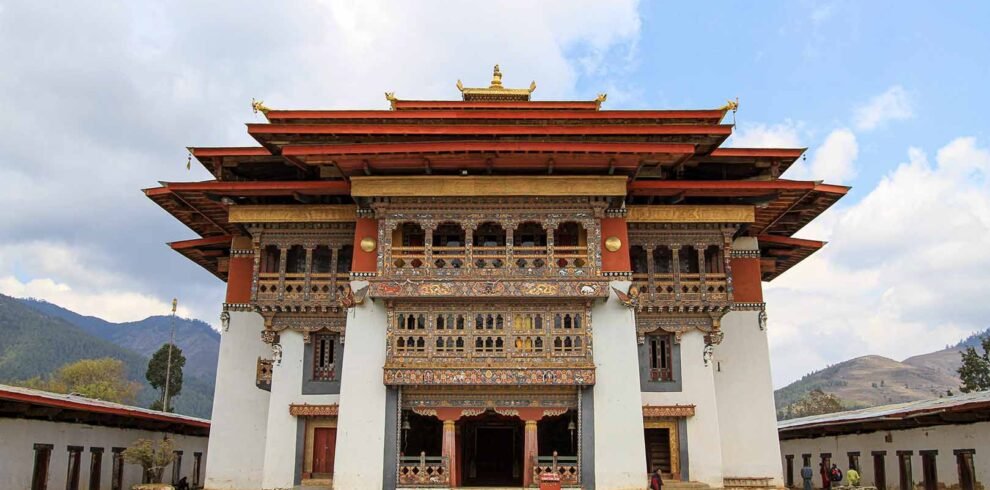
GangteyGompa (Monastery), dating back to the 16th century. Afterwards drive by luxury 4WD over the Pele La pass (3,420m) on the Black Mountain range towards
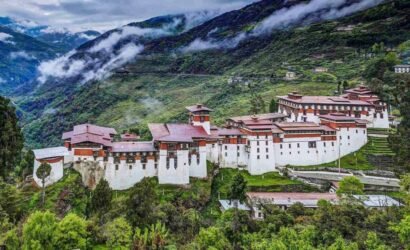
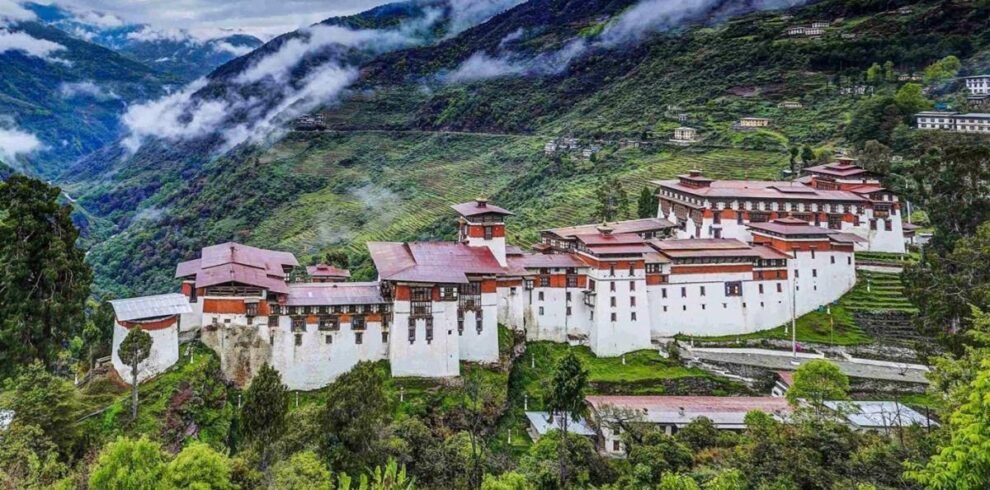
Trongsa (3 hrs). En-route visit the beautiful 18th century ChendebjiChorten. Trongsa is the ancestral home of Bhutan’s ruling dynasty. Visit Trongsa Dzong, the largest Dzong in Bhutan and the Ta Dzong museum housing a collection of
historical artifacts of the Royal Family. Continue driving towards Bumthang (2.5 hrs), the spiritual of the kingdom.
Bumthang is home to some of Bhutan’s oldest Palaces, Buddhist temples and monasteries. iOvernight in Bumthang.
In the morning visit Kurjey Lhakhang, one of the most
sacred places in the kingdom where Bhutan’s patron saint Guru Rimpoche meditated and 7th century Jambay Lhakhang. It dates back to the origins of Buddhism in Bhutan and is one of the Kingdoms oldest temples. Return to Amankora Resort for lunch before continuing sightseeing including Jakar Dzong and Tamshing Lhakhang, founded in 1501 by Pemalingpa and containing interesting and ancient Buddhist wall paintings. Overnight in Bumthang.
Enjoy a stunning mountain flight with incredible views over Bhutan from Bumthang back to the Paro Valley. On arrival you will enjoy some sightseeing around Paro including a
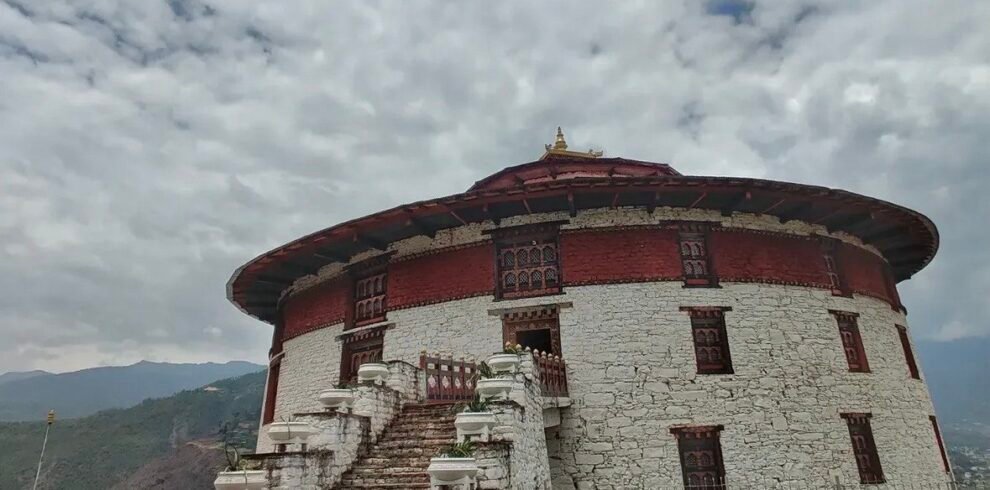
visit to the Ta Dzong Museum housing many religious relics, works of art and handicrafts offering a great orientation into Bhutan’s historical, cultural, and religious past. Next, visit the Rimpong Dzong to see the painting of the great saint
Milarepa, considered as the master of meditation by the Bhutanese and believed to have attained enlightenment in a lifetime. Dzong’s are large monasteries and district administrative centers, which were once strategic forts.
Afterwards check-in to luxury accommodation. After enjoying an optional Spa Treatment (subject to availability), enjoy a sumptuous dinner. Overnight in Paro.
After breakfast hike to Taktsang Monastery. The trail is broad and the walk of approximately 2 hours uphill takes you almost a kilometer above the Paro valley floor (for those who cannot hike we will arrange a horse for transfer up to the viewing point). The view of Taktsang Monastery built on a sheer cliff face 900 meters above the valley floor is a spectacular sight. The Monastery is also an important pilgrim site for the Buddhists. According to legend, the great Guru Rimpoche and his consort are said to have meditated in a cave here for three months when he brought the teachings of the Buddhist Dharma to Bhutan in the 8th Century. After meditation, they manifested themselves in the forms of Guru Dorji Drolo and a tigress to subdue demons in the valley below. The cave, where the monastery was later built is said to be the origin of Buddhism in Bhutan. Refreshments and lunch will be arranged in the tent specifically pitched on the path to Taktsang Monastery. On the return drive to Paro, visit 7th Century Kyichu Lhakhang, one of the 108 temples constructed by the Tibetan king SongtsenGampo. Overnight in Paro.
Enjoy breakfast before driving to the airport for flight
to your onward destination.
Cost
The Cost Includes
- Accommodation is on twin sharing basis.
- Meals : breakfast at all places.
- Transfers from one place to another.
- Sightseeing in private cars.
- Vehicle will be provided based on the itinerary.
- All current taxes such as hotel taxes and transportation taxes.
The Cost Excludes
- Entrance fees at the monuments/ temples.
- Meals not mentioned in inclusions.
- Personal Expenses / Purchase of thing.
- Any kind of insurance.
- Any increase in the govt. taxes and state taxes.
- Anything not mentioned in the itinerary.
Frequently Asked Questions (FAQs)
Annapurna Base Camp is a Grade B or a moderately difficult trekking route. So any fit person can do this trek, even if you do not have any previous experience. You should be aware of what to expect and mentally prepare for it. Then, as long as you will too, you can.
On average, you walk about 4 to 6 hours per day. One or two days can be as less as 3hrs and one or two days can be as long as 7hrs.
The highest altitude reached is 4190m. This is the elevation of Annapurna Base Camp. ABC is the highest we will climb in this trek.
Yes, you can charge batteries en route. Charger should be brought. There are hot shower facilities as well. You may have to pay a certain amount for both ($1-$2). Negotiate. Also, a hot water facility could be free at a lower elevation.
No. There are no ATMs on this trek route. You will have to draw enough cash in Pokhara or Kathmandu. There are a number of ATMs in these cities. Everything is paid in Nepali rupees. So money should be exchanged before the start of the trek.
Yes. The Internet can be accessed in most places. Sometimes, there might be some technical problems. The Internet in Nepal is not as fast as you are used to and at times you can just lose connection.
Not really. It depends on you. If you want, ABC trekking can be done independently. You could hire a guide and a porter by yourself instead of going through an agency or not hire a guide at all. Although, not having a guide can be a little problematic during the offseason.
It really depends on you. Is it your first time in Nepal? How confident are you of being able to find your way around? How pressed on time are you? If you go through an agency, it will be costlier but everything will be planned. You will only have to come, trek and return.
For the Annapurna region, pay for guides range from $20 to $30 per day and porters take $15 to $25 per day.